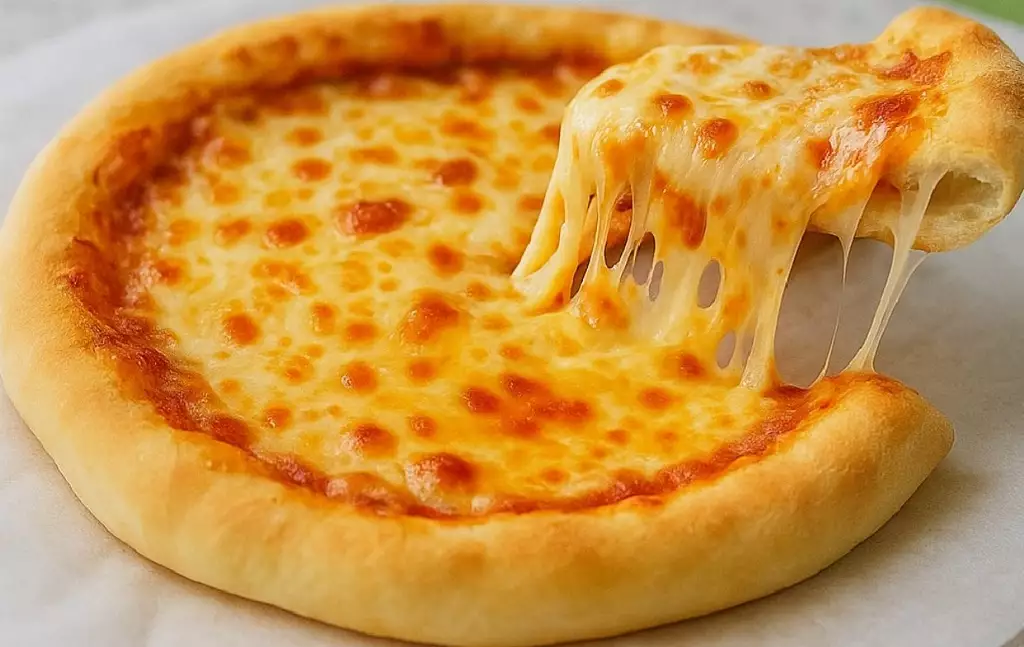
Make delicious, restaurant-style pizza at home with this easy Homemade Pizza Dough Recipe! With a golden, crispy crust, soft and chewy center, and perfectly balanced flavor, this simple dough is the perfect foundation for your favorite homemade pizza.
Made with just six basic ingredients, this pizza dough is easy to prepare, requires no special equipment, and produces wonderful results every time. Whether you’re making classic cheese pizza, pepperoni pizza, or a vegetable-loaded favorite, this versatile dough is perfect for family pizza nights.
Recipe Information
- Prep Time: 15 minutes
- Rising Time: 1–2 hours
- Cooking Time: 12–15 minutes
- Total Time: Approximately 1½–2½ hours
- Yield: 2 thin 12-inch pizzas or 1 thicker pizza
- Cooking Method: Oven baking
- Oven Temperature: 475°F (245°C)
Ingredients
For the Pizza Dough
- 2¼ teaspoons (7 g) active dry yeast
- 1 teaspoon granulated sugar
- 1 cup (240 ml) warm water, approximately 105–110°F
- 2½ cups (300–315 g) all-purpose flour
- 2 tablespoons olive oil
- 1 teaspoon salt
Optional Pizza Toppings
- Pizza sauce or marinara sauce
- Shredded mozzarella cheese
- Fresh basil leaves
- Sliced tomatoes
- Bell peppers
- Mushrooms
- Onions
- Pepperoni or cooked chicken
- Dried oregano or Italian seasoning
Step-by-Step Instructions
Step 1: Activate the Yeast
In a small bowl, combine the warm water, granulated sugar, and active dry yeast.
Stir gently and allow the mixture to rest for 5–10 minutes until it becomes foamy.
The water should be warm but not hot. If the yeast does not foam, it may be inactive and should be replaced.
Step 2: Prepare the Dough
In a large mixing bowl, combine the all-purpose flour and salt.
Add the olive oil and activated yeast mixture.
Stir with a wooden spoon or spatula until the ingredients begin to form a soft dough.
Use your hands to bring the mixture together into a dough ball.
Step 3: Knead Until Smooth
Transfer the dough to a lightly floured work surface.
Knead for approximately 5–7 minutes until the dough becomes smooth, elastic, and slightly tacky.
If the dough feels excessively sticky, sprinkle in a small amount of additional flour.
Avoid adding too much flour, as this can make the pizza crust dry and tough.
Step 4: Allow the Dough to Rise
Lightly grease a large bowl with olive oil.
Place the dough inside and turn it once to coat the surface.
Cover the bowl with a clean kitchen towel or plastic wrap.
Let the dough rise in a warm, draft-free location for approximately 1–2 hours, or until doubled in size.
Step 5: Shape the Pizza Dough
Once the dough has risen, gently press it down to release excess air.
Transfer it to a lightly floured surface.
For two thin pizzas, divide the dough into two equal portions. For a thicker crust, keep the dough in one piece.
Stretch or roll each portion into your desired pizza shape.
If the dough springs back while shaping, allow it to rest for 10–15 minutes before continuing.
Step 6: Preheat the Oven
Preheat your oven to 475°F (245°C).
Place a pizza stone, pizza steel, or sturdy baking sheet inside the oven while it heats.
Allow the baking surface to preheat thoroughly for a crispier bottom crust.
Step 7: Add Your Favorite Toppings
Transfer the shaped pizza dough onto a lightly floured pizza peel or a suitable sheet of baking parchment.
Spread a thin layer of pizza sauce over the surface, leaving a small border around the edges.
Sprinkle with mozzarella cheese and arrange your favorite toppings evenly.
Avoid adding excessive sauce or wet toppings, as too much moisture can make the crust soggy.
Step 8: Bake Until Golden
Carefully transfer the pizza onto the preheated baking surface.
Bake for approximately 12–15 minutes, adjusting for crust thickness and your oven.
The pizza is ready when the crust is golden brown, the bottom is crisp, and the cheese is melted and bubbling.
For very thin pizzas, begin checking a few minutes earlier.
Step 9: Slice and Serve
Remove the pizza from the oven and allow it to rest for 2–3 minutes.
Garnish with fresh basil, oregano, or a light drizzle of olive oil if desired.
Slice and serve warm.
Enjoy your delicious homemade pizza!
Tips for Perfect Homemade Pizza Dough
1. Use Fresh Yeast
Fresh, active yeast helps the dough rise properly and creates a light, airy texture.
2. Check the Water Temperature
Use warm water around 105–110°F. Water that is too hot can damage the yeast.
3. Knead the Dough Properly
Kneading develops gluten, giving the dough its characteristic elasticity and chewy texture.
4. Allow Enough Rising Time
Let the dough double in size before shaping. Proper rising helps develop flavor and texture.
5. Preheat the Baking Surface
A hot pizza stone, steel, or baking sheet helps create a golden, crispy bottom crust.
6. Avoid Too Many Toppings
Overloading your pizza with sauce, cheese, or vegetables can prevent the crust from baking evenly.
7. Let the Dough Rest Before Stretching
If the dough keeps shrinking back, allow it to rest for 10–15 minutes. This relaxes the gluten and makes shaping easier.
Delicious Pizza Dough Variations
Garlic and Herb Pizza Dough
Add 1 teaspoon garlic powder and 1 teaspoon Italian seasoning to the flour before mixing.
This creates a fragrant, flavorful crust that pairs beautifully with cheese and tomato sauce.
Whole Wheat Pizza Dough
Replace up to half of the all-purpose flour with whole wheat flour.
You may need a little extra water to maintain a soft, workable dough.
Cheese-Stuffed Crust
Place strips of mozzarella cheese around the outer edge of the shaped dough.
Fold the dough over the cheese and seal the edges before adding toppings.
Bake until the crust is golden and the cheese inside has melted.
Spicy Pizza Dough
Add a pinch of crushed red pepper flakes or cayenne pepper to the dry ingredients.
This gives the crust a subtle spicy flavor.
Thin and Crispy Pizza Crust
Divide the dough into smaller portions and stretch it thinly.
Use a fully preheated baking surface and avoid heavy toppings for the best results.
Creative Ways to Use Homemade Pizza Dough
This versatile dough can be used for much more than traditional pizza.
Homemade Garlic Knots
Cut the dough into strips and tie each strip into a knot.
Brush with garlic butter, sprinkle with parsley, and bake until golden brown.
Cheesy Breadsticks
Roll the dough into a rectangle and brush with olive oil or melted butter.
Sprinkle with mozzarella, garlic powder, and Italian herbs.
Cut into strips and bake until golden and cooked through.
Homemade Calzones
Roll the dough into circles and fill with mozzarella, cooked vegetables, or your favorite pizza fillings.
Fold each circle in half, seal the edges, and bake until golden.
Mini Pizzas
Divide the dough into smaller portions and shape into 4–6-inch circles.
Add sauce, cheese, and toppings for individual pizzas.
Homemade Flatbread
Roll the dough thinly, brush with olive oil, and sprinkle with herbs.
Bake until lightly golden and serve with your favorite dips.
Best Pizza Topping Combinations
Classic Margherita Pizza
- Tomato sauce
- Fresh mozzarella
- Fresh basil
- Olive oil
Pepperoni Pizza
- Pizza sauce
- Mozzarella cheese
- Pepperoni slices
- Dried oregano
Vegetable Pizza
- Tomato sauce
- Mozzarella cheese
- Bell peppers
- Mushrooms
- Red onions
- Black olives
BBQ Chicken Pizza
- BBQ sauce
- Cooked shredded chicken
- Mozzarella cheese
- Red onions
- Fresh cilantro
Garlic White Pizza
- Garlic-infused olive oil
- Mozzarella cheese
- Ricotta cheese
- Parmesan cheese
- Fresh herbs
How to Store Homemade Pizza Dough
Refrigerator Storage
After kneading, place the dough in a lightly oiled, covered container with enough room to expand.
Refrigerate for up to 3 days.
Before using, allow the dough to come closer to room temperature and become relaxed enough to stretch.
Freezer Storage
Allow the dough to complete its first rise.
Divide it into portions and lightly coat each dough ball with olive oil.
Place the portions in freezer-safe bags or airtight containers.
Freeze for up to 2 months for the best quality.
How to Thaw Frozen Pizza Dough
Transfer frozen dough to the refrigerator and allow it to thaw overnight.
Remove it from the refrigerator and let it rest at room temperature until soft, relaxed, and easy to shape.
Freezing Prepared Pizza Crusts
Shape the dough and partially bake the crust at 475°F for approximately 5–7 minutes, until set but not fully browned.
Allow it to cool completely before freezing.
When ready to serve, add your favorite toppings and bake until the crust is golden and the toppings are thoroughly heated.
Make-Ahead Pizza Dough
Homemade pizza dough is perfect for preparing in advance.
You can make the dough the night before and allow it to rise slowly in the refrigerator.
Cold fermentation can help develop a richer flavor and improve the dough’s texture.
For convenient meal preparation, divide the dough into individual portions and refrigerate or freeze them.
This makes homemade pizza nights easier and faster.
Frequently Asked Questions
Why Didn’t My Pizza Dough Rise?
The yeast may have been expired, the water may have been too hot, or the dough may have been left in a cold environment.
Use fresh yeast and allow the dough to rise in a warm, draft-free place.
Can I Use Instant Yeast Instead of Active Dry Yeast?
Yes. You can substitute the same amount of instant yeast.
Instant yeast can be mixed directly with the flour without first dissolving it in water.
What Is the Best Flour for Homemade Pizza Dough?
All-purpose flour produces a soft, chewy crust.
Bread flour creates a stronger, stretchier dough with a chewier texture.
Italian 00 flour can also work well, depending on the type and baking method.
Can I Make Pizza Dough Without a Stand Mixer?
Absolutely! This recipe can be prepared entirely by hand.
Simply mix the ingredients in a bowl and knead on a lightly floured surface until smooth and elastic.
How Can I Make My Pizza Crust Crispy?
Preheat your oven and baking surface thoroughly.
Stretch the dough evenly, use moderate amounts of sauce and toppings, and bake at a high temperature.
Can I Make Pizza Dough Ahead of Time?
Yes. Store the prepared dough in the refrigerator for up to 3 days or freeze it for up to 2 months.
Can I Use This Dough for Breadsticks?
Yes! Shape the dough into strips, brush with garlic butter or olive oil, and bake until golden brown.
Why Does My Pizza Dough Keep Shrinking?
The gluten may be too tight.
Allow the dough to rest for 10–15 minutes before stretching it again.
Can I Make This Dough Without Sugar?
Yes. Yeast can ferment the carbohydrates in flour without added sugar, although rising and browning may differ slightly.
How Long Should I Knead Pizza Dough?
Knead by hand for approximately 5–7 minutes, or until the dough becomes smooth and elastic.
A stand mixer with a dough hook may require slightly less time.
Final Thoughts
This Homemade Pizza Dough Recipe is an easy and reliable way to create delicious, restaurant-style pizza in your own kitchen.
With simple ingredients, straightforward instructions, and a little patience, you can make a beautifully golden crust that’s crispy on the outside and soft and chewy on the inside.
Whether you’re preparing a classic Margherita pizza, a cheesy pepperoni favorite, or a vegetable-loaded creation, this homemade dough provides the perfect base.
Try this easy Homemade Pizza Dough Recipe and enjoy fresh, flavorful, perfectly baked pizza with your family and friends!