Every evening, just as the sun disappeared behind the tall palm trees surrounding Umudike village in southeastern Nigeria, an old woman named Mama Ngozi would step outside her tiny mud hut with a rusty kerosene lantern.
She would clean the dusty glass with the edge of her wrapper, fill it with just enough kerosene to last until dawn, light the flame, and place it carefully on a short wooden pole beside her front door.
It never mattered whether it was raining, whether the Harmattan winds filled the air with dust, or whether she had enough food to eat.
The lantern always burned.
To the villagers, the ritual seemed strange.
To the children, it was frightening.
To the adults, it became the perfect excuse for gossip.
“There she goes again,” one woman whispered every evening while returning from the market.
“They say she talks to spirits,” another replied.
“My husband swears he has heard voices coming from that hut after midnight.”
Soon, the stories became more dramatic.
Some claimed Mama Ngozi was practicing witchcraft.
Others insisted she was waiting for the ghost of her dead husband.
A few believed the lantern was a signal to dangerous criminals hiding in the nearby forest.
Nobody knew the truth.
Nobody ever asked.
Mama Ngozi had lived alone for almost twenty-eight years.
Her husband, Okeke, had disappeared during a violent communal conflict long ago. His body was never found, leaving her trapped between hope and grief.
She had only one son, Chibuzo.
When he turned nineteen, he left for Lagos to search for work.
At first, he sent letters every month.
Then the letters became fewer.
Eventually they stopped altogether.
Some villagers said he had forgotten his mother.
Others claimed he had died.
Mama Ngozi never accepted either explanation.
Every market day she bought an extra bowl of garri, saying quietly, “My son may return today.”
People laughed behind her back.
“That old woman is living inside yesterday.”
Years passed.
Her small farm produced barely enough cassava to survive.
Some nights she drank only water before sleeping.
Yet somehow she always managed to buy kerosene.
People noticed.
“She cannot afford rice,” a neighbour said.
“But she never runs out of kerosene.”
Suspicion grew stronger every year.
One evening, several teenagers decided to spy on her.
Hidden behind thick banana trees, they watched through a crack in the wooden wall.
Inside the hut, Mama Ngozi knelt beside an old wooden table.
The lantern illuminated several faded photographs.
She gently dusted each picture before whispering prayers.
The boys could not hear her words.
Instead, they imagined something darker.
By morning, the rumour had spread through the entire village.
“She performs rituals every night.”
Even the village chief began to worry.
Although he respected elderly people, pressure from frightened villagers forced him to act.
He visited Mama Ngozi personally.
“Mama,” he said kindly, “people are becoming afraid.”
She smiled gently.
“Afraid of an old widow?”
“They don’t understand why you light the lantern every night.”
She looked at the glowing flame.
“My husband always told me that no traveller should return to darkness.”
The chief frowned.
“What does that mean?”
“It means exactly what I said.”
She refused to explain further.
The mystery remained.
Months later, another strange event unsettled the village.
A commercial motorcycle rider passing near Mama Ngozi’s hut around midnight claimed he heard several male voices coming from inside.
But when he approached the house, everything became silent.
No one entered.
No one came out.
The story spread like wildfire.
Now even people who had defended the widow started avoiding her home after sunset.
Children ran whenever they walked past her compound.
Pregnant women were warned never to look toward the lantern.
Then one rainy evening, the impossible happened.
The lantern remained lit.
But Mama Ngozi never came outside the following morning.
Her neighbours assumed she was sleeping.
By afternoon, the lantern was still burning.
Smoke drifted from inside the hut, but nobody answered repeated knocks.
“Mama Ngozi!”
Silence.
Again they shouted.
Nothing.
Concern slowly replaced fear.
Someone suggested breaking the door.
Others refused.
“What if she really practices dark powers?”
Finally, the village chief called the police from the nearest divisional headquarters.
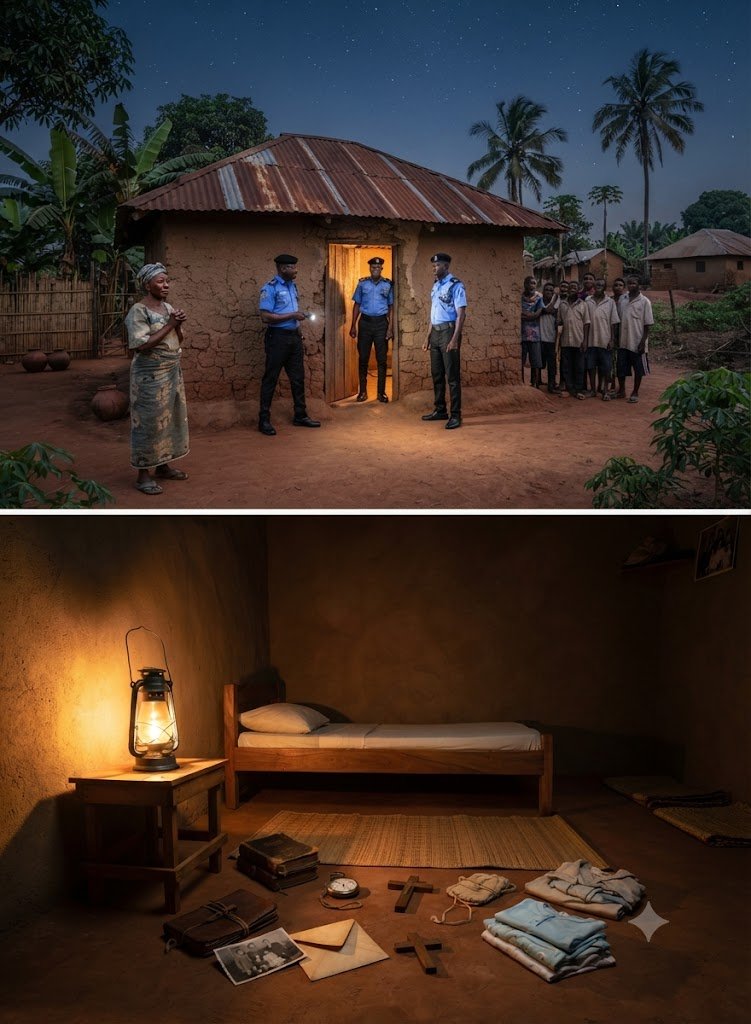
An hour later, two officers arrived with several community leaders.
The wooden door was locked from inside.
One officer knocked loudly.
“Police! Open the door!”
No response.
The chief looked nervous.
“I think something is wrong.”
The senior officer nodded.
“Break it.”
A young constable kicked the weak wooden door once.
Twice.
On the third kick, it crashed inward.
Everyone expected to discover charms, shrines or frightening objects.
Instead…
They froze.
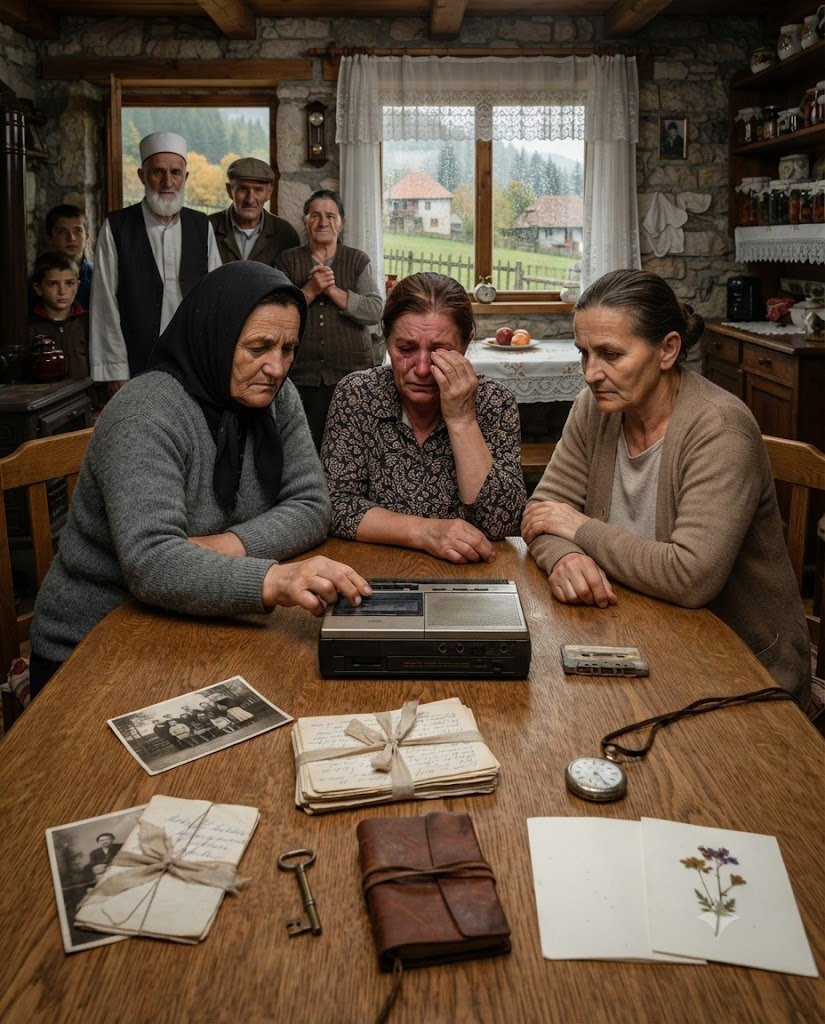
Inside the tiny hut were dozens of carefully labelled cardboard boxes stacked neatly against the walls.
An old battery-powered radio played softly in one corner.
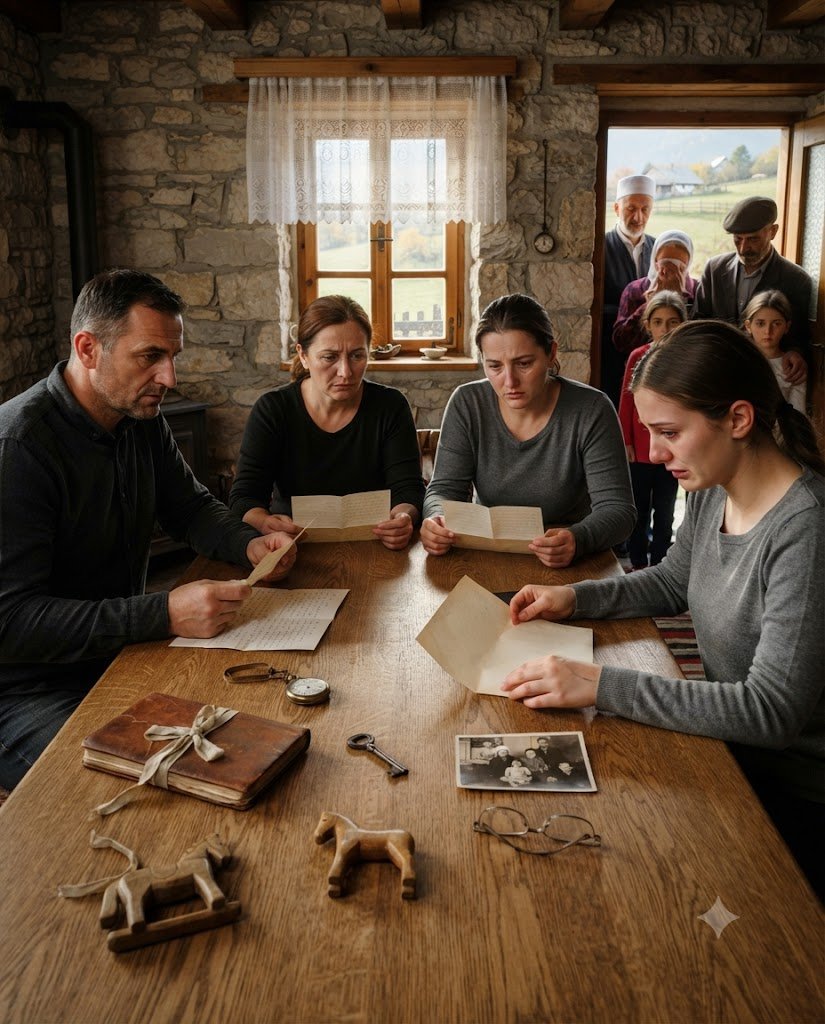
On the wooden table sat hundreds of unopened letters tied together with blue ribbons.
Beside them lay official government files.
Large envelopes.
Old photographs.
And a thick leather notebook filled with names.
But the greatest shock stood silently at the centre of the room.
A life-sized notice board covered with photographs of missing people from every part of Nigeria.
At the bottom was a handwritten sentence.
“Every light must guide someone home.”
Nobody understood what they were looking at.
Then one police officer picked up the first government file.
His face suddenly changed.
He whispered only four words.
“This cannot be real…”
The entire hut fell silent.
The senior police officer, Inspector Musa Ibrahim, carefully opened the first government file. Inside were photocopies of missing-person reports from different police stations across Nigeria—Enugu, Onitsha, Aba, Lagos, Benin City, Port Harcourt, and even Abuja. Every report had handwritten notes in the margins, recording dates, locations, and names of people who claimed to have seen the missing individuals.
Inspector Musa looked at the village chief in disbelief.
“Who gave her access to all these records?”
No one answered.
Another officer untied one of the blue ribbons holding dozens of unopened letters together. Most of them were addressed to families searching for loved ones who had disappeared over the years. Many had never been posted.
Each envelope contained careful handwriting.
“I believe I have information about your son.”
“Someone in our market said your daughter was seen boarding a bus to Kano.”
“Please do not lose hope.”
The officer swallowed hard.
“This woman wasn’t hiding dark secrets…”
“She was trying to find missing people.”
The villagers stared at one another, ashamed.
For nearly thirty years they had mocked the lonely widow while she quietly devoted her life to families she had never even met.
As the officers searched further, they discovered dozens of notebooks.
Every notebook documented one missing person.
Their names.
Their photographs.
The date they vanished.
Possible witnesses.
Addresses.
Phone numbers.
Mama Ngozi had become an investigator without anyone knowing.
Then Inspector Musa opened the old leather diary lying beside the lantern.
The first page read:
“If I stop searching, who will remember them?”
He turned another page.
The entries began twenty-eight years earlier—the same year Mama Ngozi’s husband disappeared.
She had gone from one police station to another looking for him.
At every station she met parents searching for children, wives searching for husbands, and children searching for parents.
She soon realized that most poor families could not afford to continue looking.
So she made them a promise.
“I will remember every name.”
And she had.
Every evening she lit the lantern because she believed that anyone returning after years away should never find darkness waiting at home.
The lantern was never for ghosts.
It was for hope.
Suddenly one of the younger officers shouted.
“Sir… come quickly.”
Hidden beneath the wooden bed was a locked metal box.
Inside were dozens of newspaper clippings.
At the bottom rested an old mobile phone wrapped in cloth.
The battery was dead.
Fortunately, the phone also contained a small memory card.
The officers took everything to the station for examination.
Three days later, the results shocked everyone once again.
The memory card contained voice recordings.
Most were interviews Mama Ngozi had secretly recorded with people who claimed to have seen missing individuals over the years.
One recording stood out.
It had been made only two months earlier.
An elderly truck driver said,
“I remember a man named Okeke. During the communal violence years ago, he wasn’t killed. Soldiers rescued several injured men and took them north. One of them kept repeating the name ‘Ngozi.'”
Inspector Musa replayed the recording several times.
Could Mama Ngozi’s husband have survived?
The investigation reopened immediately.
Old military records were searched.
Hospital archives were examined.
Weeks passed without answers.
Then an unexpected phone call arrived from Kaduna.
An elderly care home reported having a resident named Okeke Nwosu.
The man suffered from memory loss after a head injury decades earlier.
He remembered almost nothing…
Except one thing.
Every evening he asked the nurses,
“Has my wife lit the lantern?”
Inspector Musa travelled to Kaduna himself.
When he showed the old man a photograph of Mama Ngozi, tears filled his eyes.
“My Ngozi…”
The words came out slowly.
“My light…”
The entire room became silent.
DNA testing confirmed the unbelievable truth.
The man everyone believed had died twenty-eight years earlier was alive.
But fate had played another cruel trick.
Mama Ngozi had passed away only days before he was found.
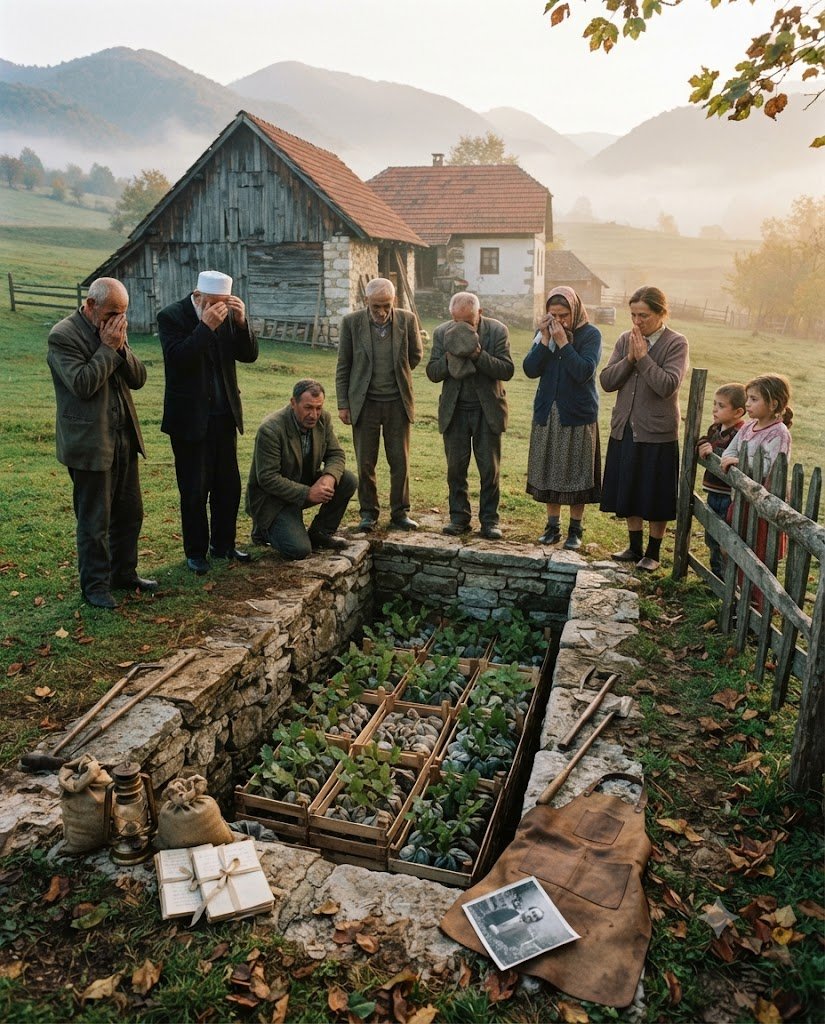
When Inspector Musa returned to Umudike with the news, the whole village gathered in the square.
Many people cried openly.
The same neighbours who had called her a witch could not lift their heads in shame.
The village chief addressed everyone.
“We judged an innocent woman because we refused to ask questions.”
No one disagreed.
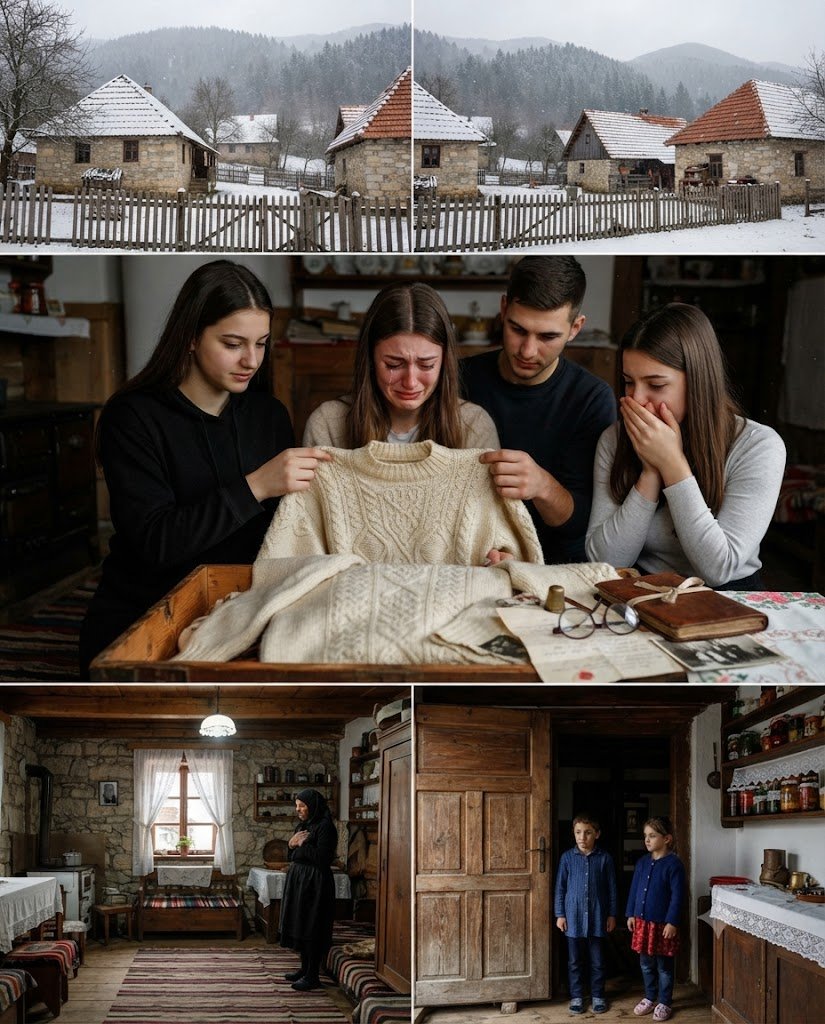
Mama Ngozi’s funeral became one of the largest the community had ever witnessed.
Families travelled from every corner of Nigeria after hearing her story.
Many recognized their relatives’ names inside her notebooks.
Some even discovered new clues that helped them reunite with loved ones years later.
Her work continued helping people long after her death.
Inspector Musa personally arranged for every notebook, letter, photograph, and document to be preserved.
With support from the state government and charitable organizations, the old hut was transformed into a Missing Persons Resource Centre.
Above the entrance hung the same lantern that Mama Ngozi had lit every night.
Beneath it was a simple inscription:
“Hope never sleeps.”
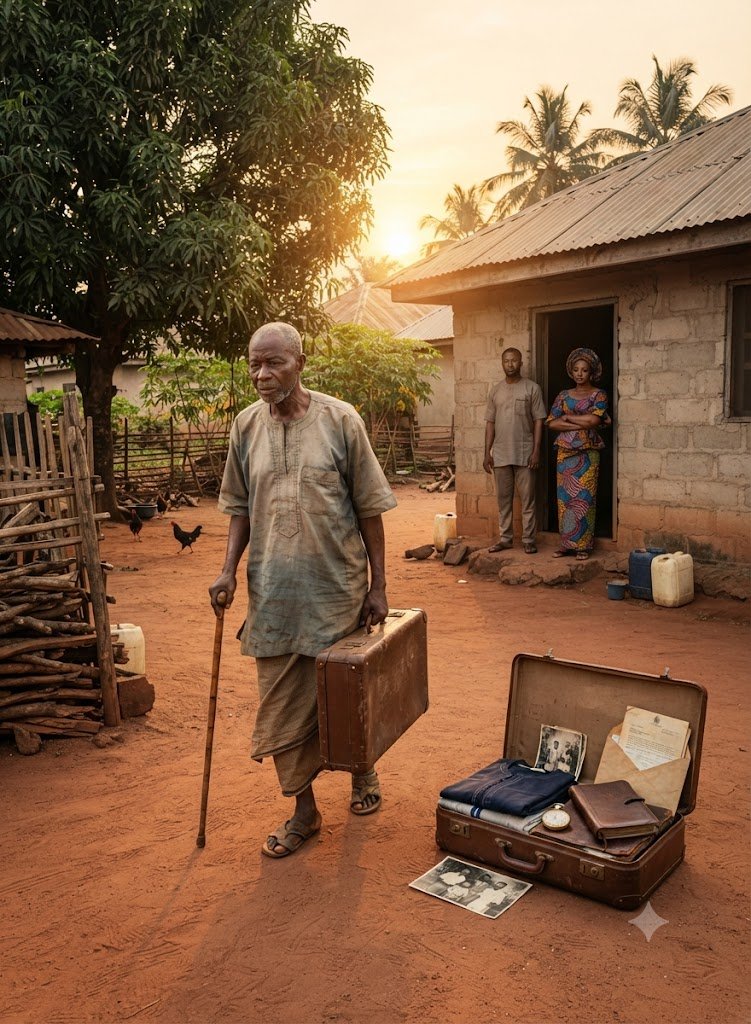
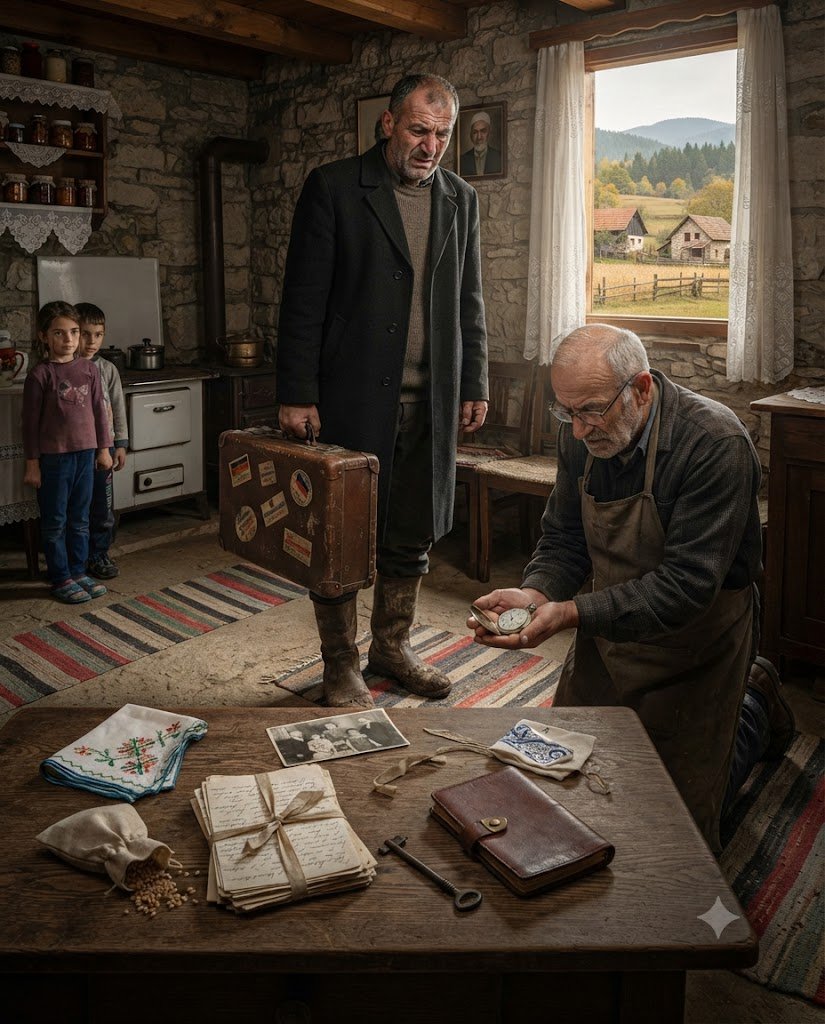
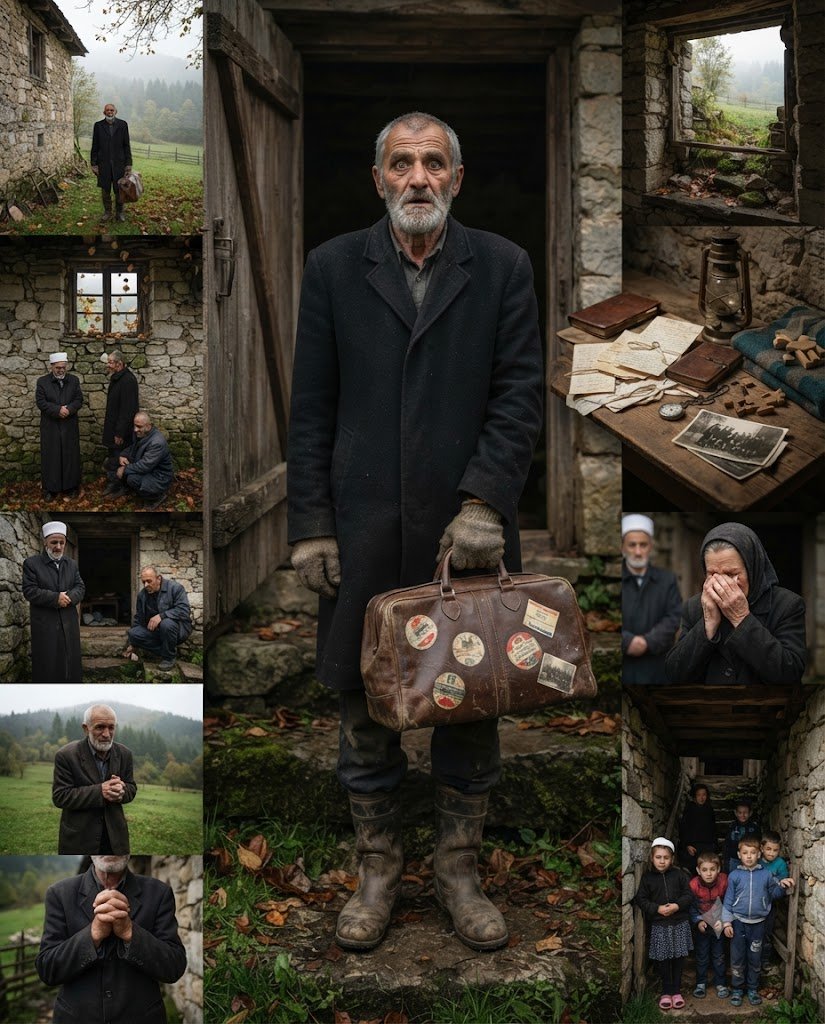
Months later, Okeke visited the village for the first time since regaining his memories.
Walking slowly with a cane, he entered the restored hut.
Everything remained exactly as his wife had left it.
The wooden table.
The faded photographs.
The diary.
The lantern.
He gently placed his trembling hand on the cold glass.
“I came home,” he whispered.
“I’m sorry it took me so long.”
As the sun disappeared behind the palm trees, Inspector Musa handed him a box of matches.
Without saying a word, Okeke filled the lantern with fresh kerosene.
He struck a match.
The flame flickered softly before glowing steadily against the evening sky.
One by one, the villagers gathered outside.
Nobody spoke.
For the first time in nearly three decades, they understood why the light had never gone out.
It had never been a signal to spirits.
It had never been a ritual.
It had been the faithful promise of a wife who believed that as long as a lantern burned outside her home, her husband—and every missing soul searching for the way back—would always have a light to guide them home.
From that evening onward, every year on the anniversary of Mama Ngozi’s passing, every family in Umudike lit a lantern outside their homes.
Not because they feared the darkness.
But because one poor widow had taught them that hope is brightest when everyone else has stopped believing.
END