The first time Chief Emeka Nwosu entered his son’s house through the back door, he knew that something had changed forever.
For many years, the old man had been the most respected person in Umuorie village, a quiet community outside Enugu where people still greeted elders with both hands and where family names carried the weight of history. Emeka had worked as a railway clerk in the city before retiring to the family compound his father had built with red earth and strong timber. After his wife died, his only son, Chinedu, became the centre of his life.
Emeka had sacrificed everything for him.
He sold two plots of farmland to send Chinedu to university in Lagos. When Chinedu wanted to start an import business, Emeka emptied his retirement account and borrowed money from an old colleague. When the business almost collapsed, the old man travelled overnight by bus to Lagos and begged a supplier to give his son more time.
Chinedu never forgot those sacrifices—at least not until he married Vanessa.
Vanessa was beautiful, educated and confident. She had grown up in Abuja and disliked village life. At first, she treated Emeka with respect, calling him “Papa” and serving him the best piece of meat whenever the family ate together. But after she and Chinedu moved into the renovated family house, her attitude slowly changed.
She complained that Emeka woke too early and made noise in the courtyard. She said the smell of his herbal medicine entered her room. She accused him of interfering whenever he advised Chinedu about money.
“Your father does not see you as a grown man,” she often whispered to her husband. “He wants to control everything in this house.”
Chinedu tried to defend his father at first.
“He built this house,” he reminded her. “We are living here because of him.”
Vanessa would become quiet, wipe away tears and say, “So I am only a visitor? Is this not my home too?”
The argument that destroyed the family began on a rainy evening in July.
Chinedu had returned from Lagos after losing a large business deal. He was angry, exhausted and already afraid that his company would fail. Vanessa told him that Emeka had been asking questions about the business and had warned her that Chinedu was spending too much.
“He said you are irresponsible,” she claimed. “He said you will destroy everything he worked for.”
Emeka had said no such thing.
What he had actually told her was simple: “Please help my son rest. He carries too much worry in his heart.”
But Vanessa repeated her version until Chinedu’s disappointment became rage.
He stormed into the old man’s room, where Emeka was sitting beside the window with a small Bible on his lap.
“Papa, why do you keep discussing my life with my wife?” Chinedu demanded.
Emeka looked confused. “What are you talking about?”
“You called me irresponsible. You said I would destroy the family.”
The old man slowly stood up. “Chinedu, I have never said such a thing.”
Vanessa appeared at the door behind her husband. Her face was calm, but her eyes were cold.
“So now I am a liar?” she asked.
Emeka looked from her to his son and understood that the truth no longer mattered.
Chinedu pointed towards the courtyard. “I cannot continue like this. There is no peace in this house because of you.”
The old man’s lips trembled. “This is your mother’s house. This is the house where you were born.”
“And now it is my family’s house,” Chinedu replied. “Vanessa is my wife. I must protect my marriage.”
Emeka stared at him for a long time.
“Are you asking me to leave?”
Chinedu said nothing.
That silence was more painful than any insult.
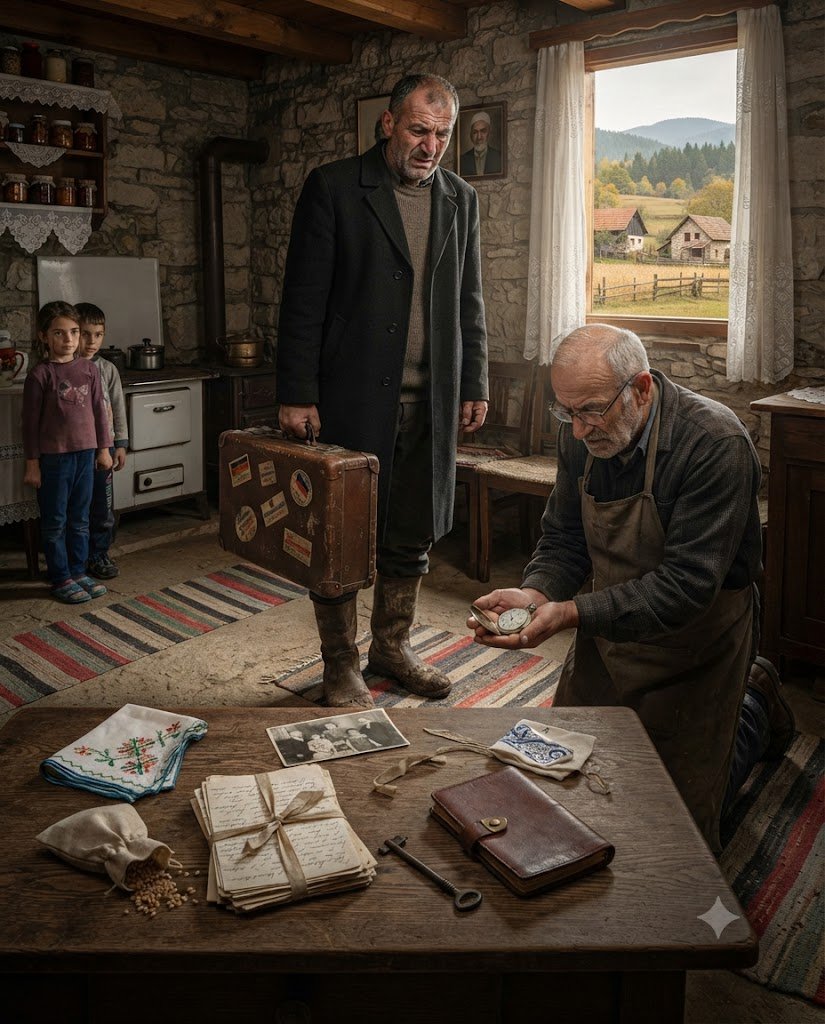
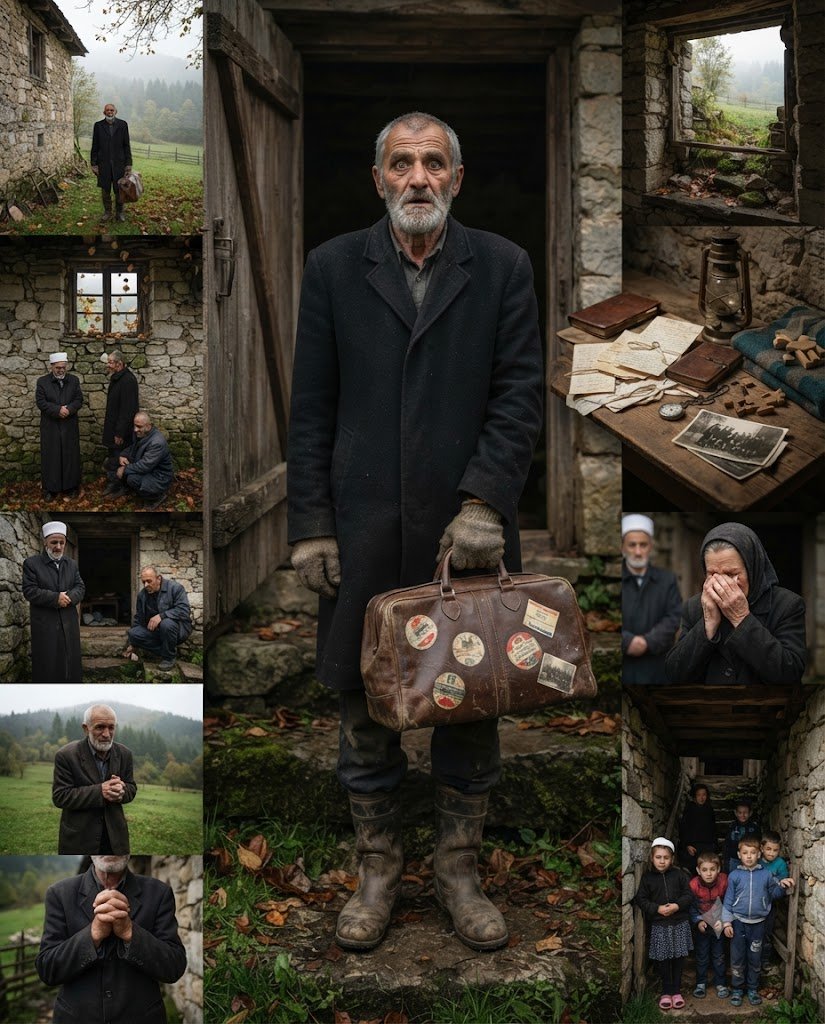
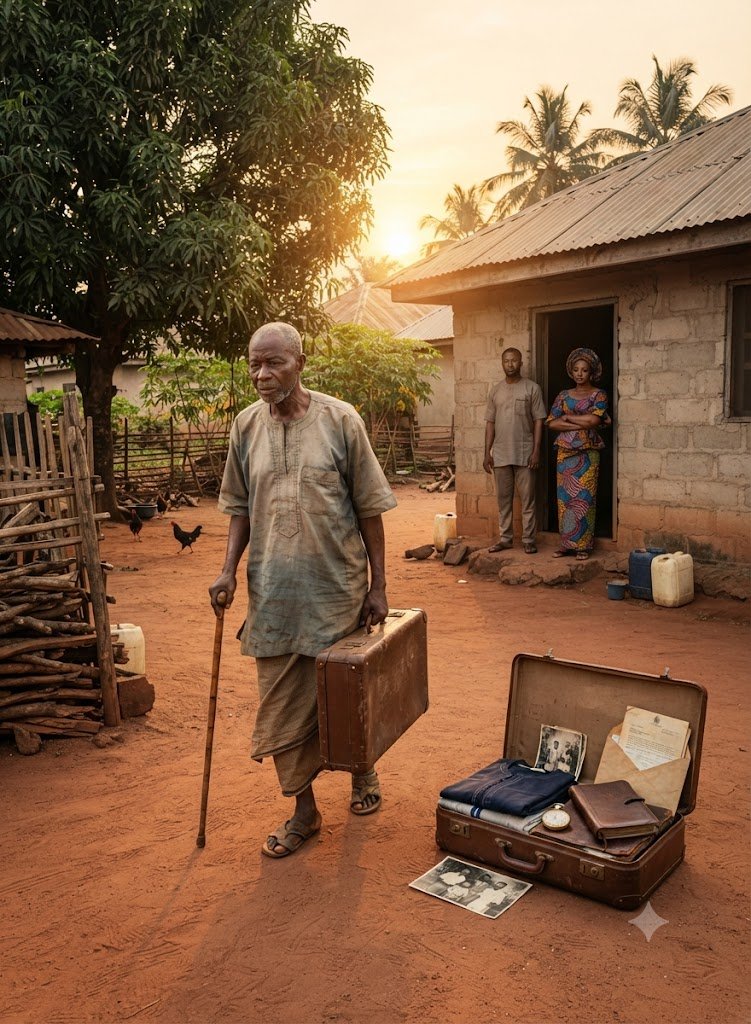
The following morning, Emeka packed three shirts, two trousers, his Bible and a small dusty suitcase that had remained locked beneath his bed for decades. He did not beg. He did not curse anyone. He simply carried his belongings outside while neighbours watched from their verandas.
Mama Ifeoma, an elderly widow who lived nearby, rushed towards him.
“Chief, where are you going?”
Emeka forced a weak smile. “A man must know when his presence has become a burden.”
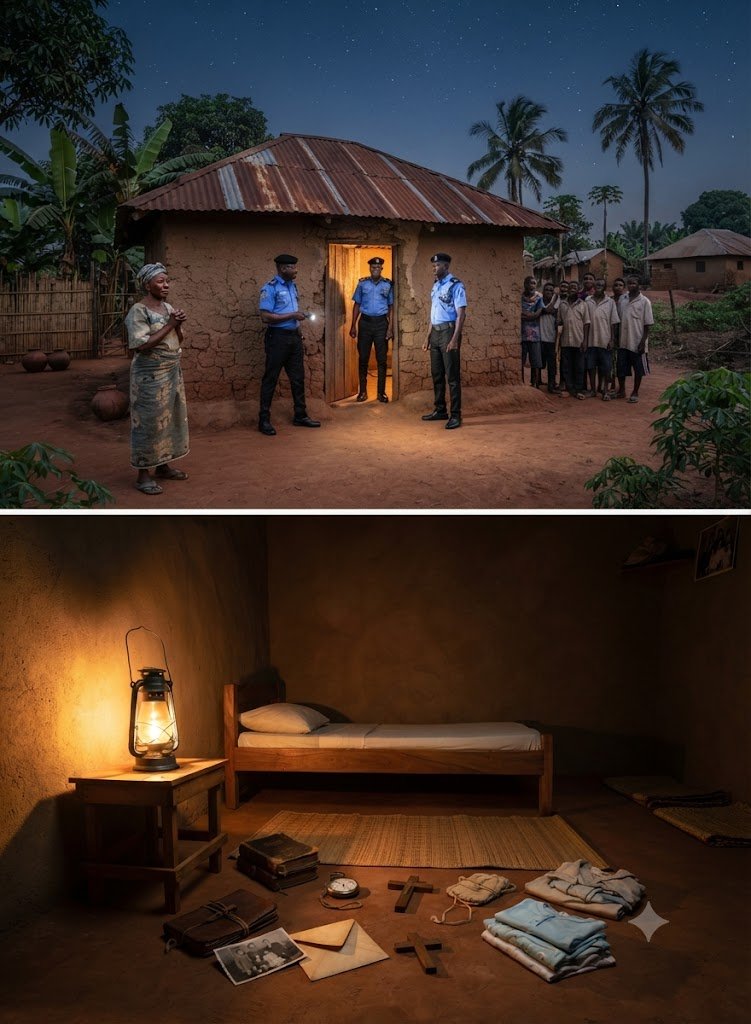
He moved into a small room behind an abandoned mechanic’s workshop at the edge of the village. The roof leaked. There was no electricity. Some nights, he ate only roasted groundnuts and drank water.
Still, he refused help from people who wanted to confront Chinedu.
“He is my son,” Emeka always said. “Do not fight him because of me.”
Months passed.
Chinedu’s business continued to struggle. Vanessa blamed bad luck, jealous relatives and finally Emeka himself.
“Since your father left, everything has become worse,” she said one night. “Maybe he placed a curse on us.”
Chinedu wanted to dismiss the idea, but guilt had already turned into fear. He stopped visiting the old man. He ignored Mama Ifeoma whenever she came to report that Emeka was ill.
One Sunday morning, Chinedu received a call from the village catechist.
“Your father collapsed during service,” the man said. “We have taken him to the clinic.”
By the time Chinedu arrived, Emeka was barely conscious.
The old man’s face had become thin, and his breathing sounded like dry leaves rubbing together. Chinedu stood beside the bed, unable to speak.
Emeka opened his eyes.
“My son,” he whispered.
“Papa, I am here.”
The old man tried to lift his hand, but it fell back onto the mattress.
“The suitcase,” he said.
“What suitcase?”
“The brown one. Do not let anyone take it.”
Chinedu leaned closer. “What is inside?”
But Emeka’s eyes had already closed.
He died before sunset.
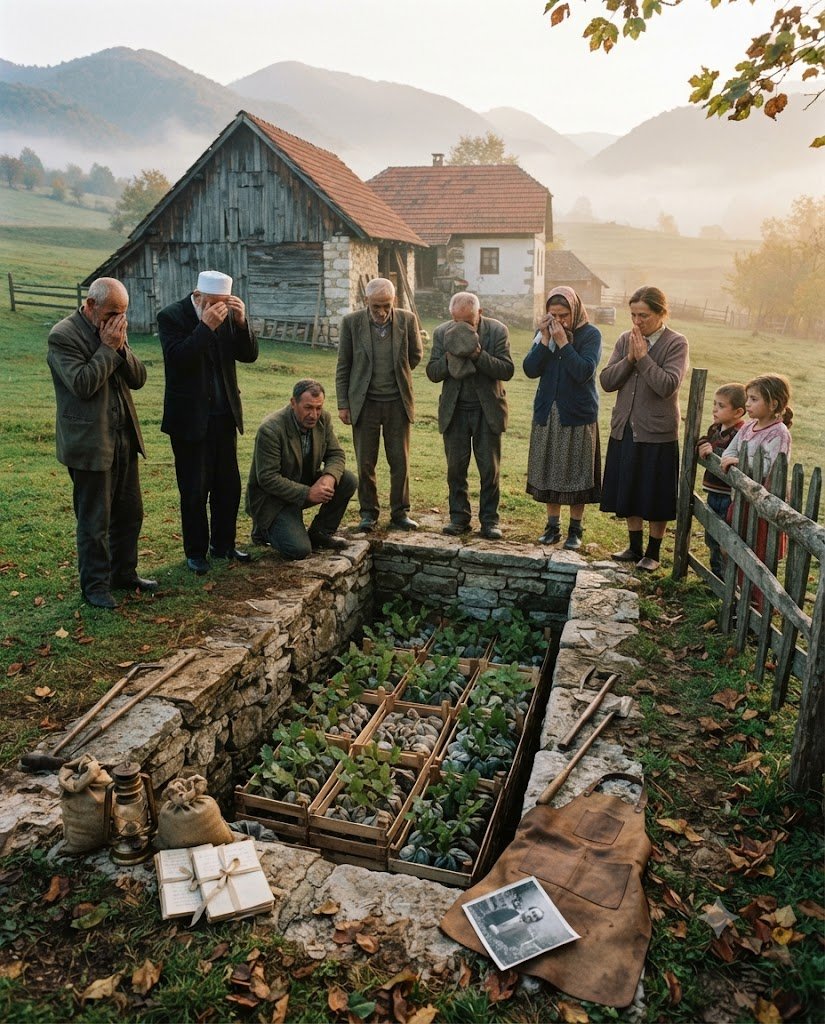
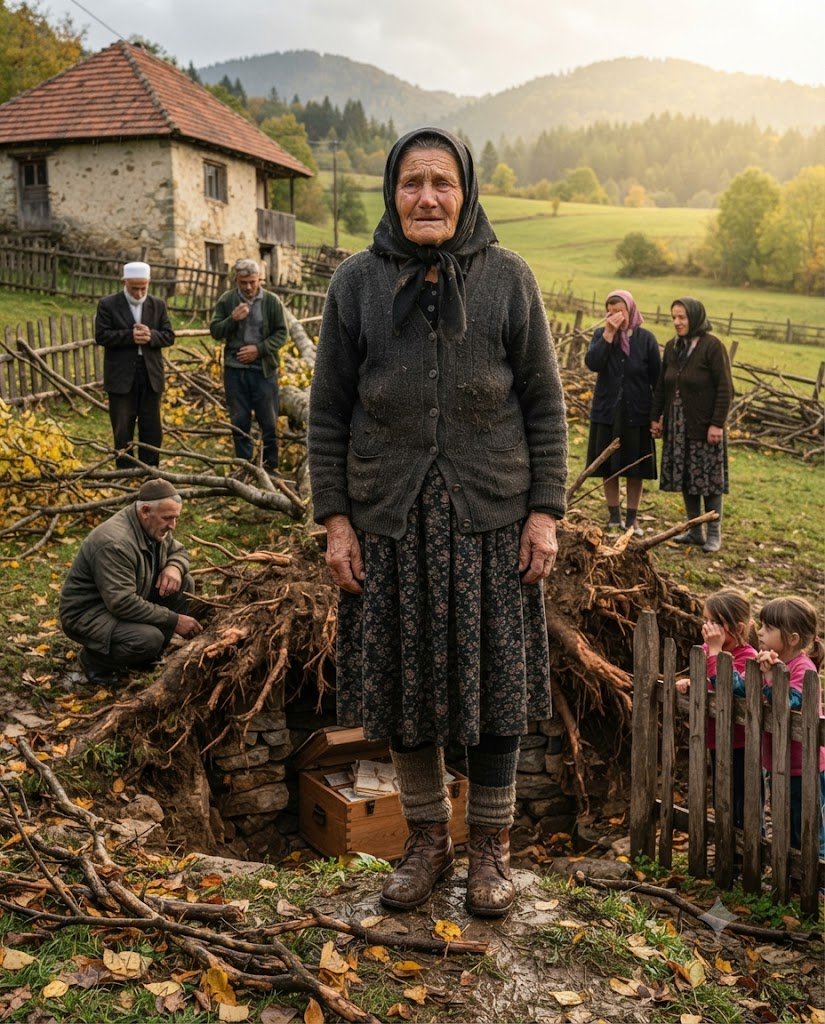
The burial took place four days later. Hundreds of villagers attended, yet Chinedu felt completely alone. People greeted him with respect, but many avoided his eyes. He knew what they were thinking.
A son had thrown away the man who gave him everything.
Vanessa stood beside him in black clothing and dark glasses. She did not cry.
After the burial, Mama Ifeoma approached Chinedu and handed him a small brass key.
“Your father gave me this two weeks ago,” she said. “He told me to give it to you only after he was buried.”
Chinedu immediately remembered the old man’s final words.
The suitcase.
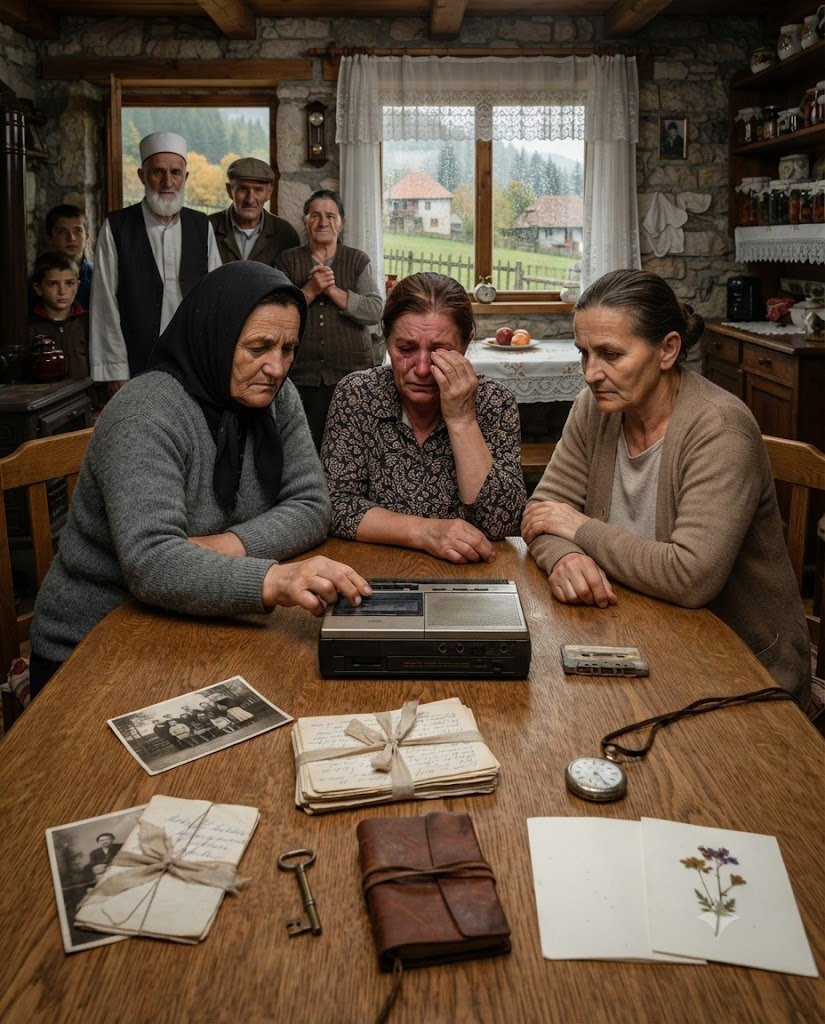
That night, while Vanessa slept, he drove to the small room where his father had spent his last months. The place smelled of damp wood and old medicine. On the floor beside the narrow bed sat the dusty brown suitcase.
Chinedu knelt and inserted the key.
The lock opened with a sharp click.
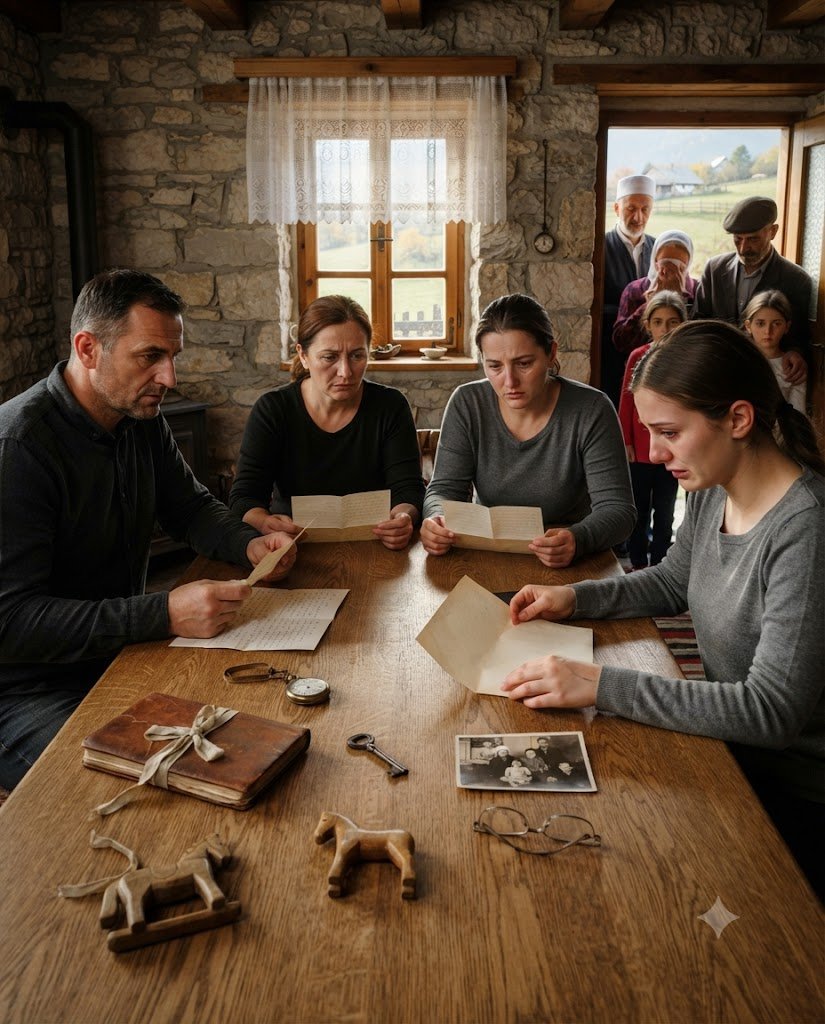
Inside were old photographs, receipts from his university, letters he had written as a child and a bundle of documents tied with a faded red ribbon.
At the bottom lay a sealed envelope.
On it, his father had written:
For Chinedu. Read this when I am no longer alive. Then you will understand why I never stopped protecting you.
Chinedu’s hands began to shake.
He opened the envelope and pulled out an old government document bearing an official stamp from the High Court in Enugu.
The first line made his heart stop.
Affidavit of Guardianship and Change of Identity.
Below it was his own name.
And beneath that, another name he had never seen before.
Biological father: Mr. Gabriel Okafor.
Chinedu dropped the paper.
Emeka Nwosu—the man he had called Papa all his life—was not his biological father.
For several minutes, Chinedu remained on the floor, staring at the document as if it had been written in another language.
His first thought was that it had to be false.
His second thought was about Vanessa.
He gathered the papers and drove home before dawn. Vanessa was waiting in the sitting room, her arms folded.
“Where have you been?” she asked.
Chinedu placed the affidavit on the table.
“Did you know about this?”
Vanessa glanced at the paper. For one second, fear crossed her face.
Then it disappeared.
“How could I know anything about your father’s old documents?”
Chinedu noticed the mistake immediately.
He had not told her what the paper contained.
He slowly looked up. “You did know.”
Vanessa stepped backwards. “Chinedu, you are tired. You are not thinking properly.”
He opened the remaining documents. There were letters, bank records and a handwritten confession from his late mother, Adaeze.
The truth unfolded piece by piece.
Before marrying Emeka, Adaeze had been engaged to Gabriel Okafor, the son of a wealthy transport businessman. Gabriel abandoned her when she became pregnant. His family threatened her and paid a local official to erase all public records connecting Gabriel to the child.
Emeka had been Adaeze’s childhood friend.
When the village began mocking her and her family wanted to send her away, Emeka married her. He gave Chinedu his surname, raised him as his own and never revealed the truth.
But that was not the greatest secret.
Years later, Gabriel returned.
He had become rich and wanted his son back, not because he loved Chinedu, but because he had no other male heir. Emeka refused. Gabriel then signed a legal settlement, transferring three commercial properties in Enugu and a large sum of money into a trust for Chinedu.
The trust could only be claimed after Emeka’s death.
Chinedu read the final letter.
My son,
Blood did not make you mine. Love did. I kept the truth from you because I never wanted you to feel unwanted. Gabriel gave money because he wanted silence, not because he wanted to be your father. Everything in this file belongs to you. But be careful. Some people came close to you because they knew this secret before you did.
Chinedu’s eyes moved to the next page.
It contained the name of the lawyer who managed the trust.
Barrister Nnamdi Eze.
Vanessa’s maternal uncle.
Chinedu felt the room spin.
He returned to the sitting room and placed the letter before his wife.
“You married me because of the trust.”
Vanessa began crying. “No. It was not like that.”
“Tell me the truth.”
She covered her face.
Her uncle had discovered the file years earlier while working for Gabriel Okafor. He knew that the trust would become available only after Emeka died. He also knew that Emeka would never allow anyone to manipulate Chinedu.
Vanessa was introduced to Chinedu deliberately.
At first, she claimed, she had truly grown to love him. But her uncle pressured her to separate father and son. If Emeka remained close, he might change the legal arrangements or reveal the truth before they were ready.
“So you lied about him,” Chinedu said.
Vanessa fell to her knees. “I only wanted us to have a better life.”
“You made me throw out the man who saved me.”
“I did not know he would die.”
“But you knew he was sick.”
Vanessa reached for his hand, but he pulled away.
Chinedu drove straight to Barrister Eze’s office. When the lawyer saw the documents, he stopped pretending. He explained that Gabriel Okafor had died two months earlier, and the trust was now worth more than anyone had expected.
The properties, investments and accumulated rent were valued at hundreds of millions of naira.
“You are a wealthy man,” the lawyer said.
Chinedu stared at him with disgust.
“I was already rich,” he replied. “I had a father who loved me. You people made me understand that only after I buried him.”
He reported the lawyer to the authorities for fraud, concealment and attempted manipulation of the trust. Investigators later discovered that Barrister Eze had already transferred part of the rental income into secret accounts.
Vanessa returned to Abuja before the investigation ended. Chinedu did not stop her. Their marriage was over.
But money could not repair the wound inside him.
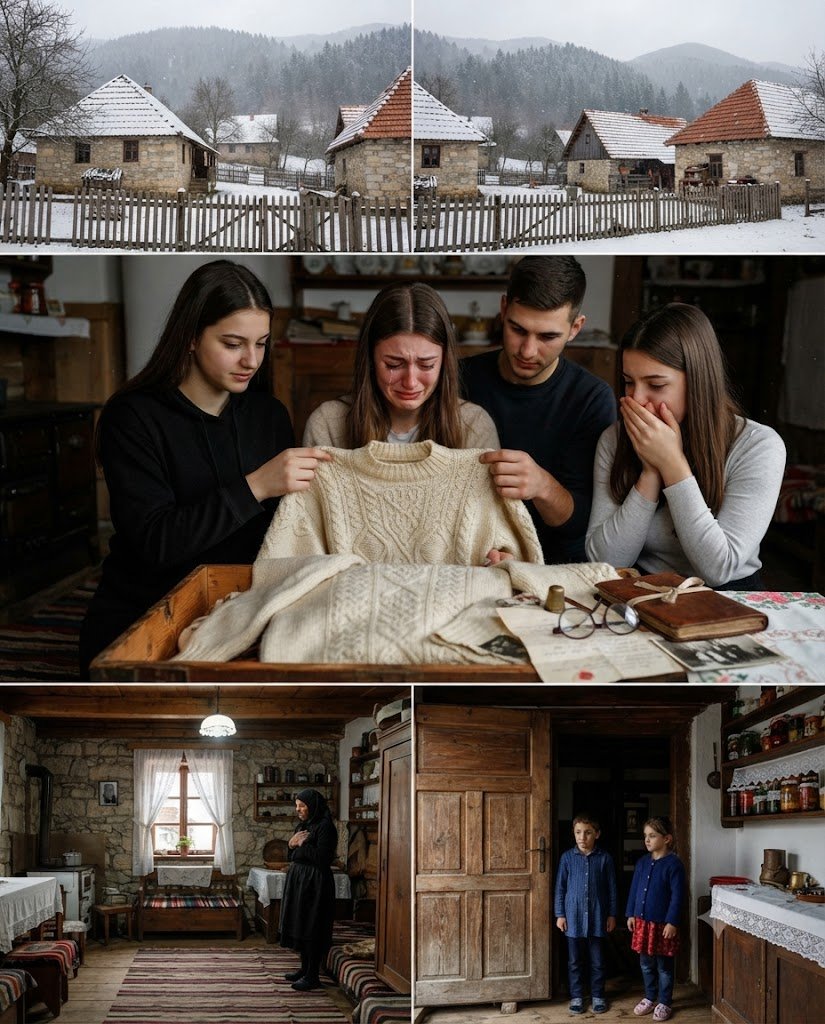
For weeks, he slept in his father’s small room behind the mechanic’s workshop. He read every letter in the suitcase. He found school reports Emeka had preserved, birthday cards, photographs and even the receipt for the bicycle Chinedu had received when he turned twelve.
On the back of one photograph, Emeka had written:
The day my son called me Papa for the first time. The happiest day of my life.
Chinedu pressed the photograph to his chest and wept until morning.
He later renovated the family house, but he did not live there.
Instead, he converted it into a home for elderly people who had been abandoned by their children. He named it the Chief Emeka Nwosu Foundation.
The first resident was an old farmer whose sons had moved abroad and stopped sending money. The second was a widow who had been living alone in a leaking hut.
Every Sunday, Chinedu cooked for them himself.
People in Umuorie village watched him change from a proud businessman into a quiet man who greeted every elder with humility.
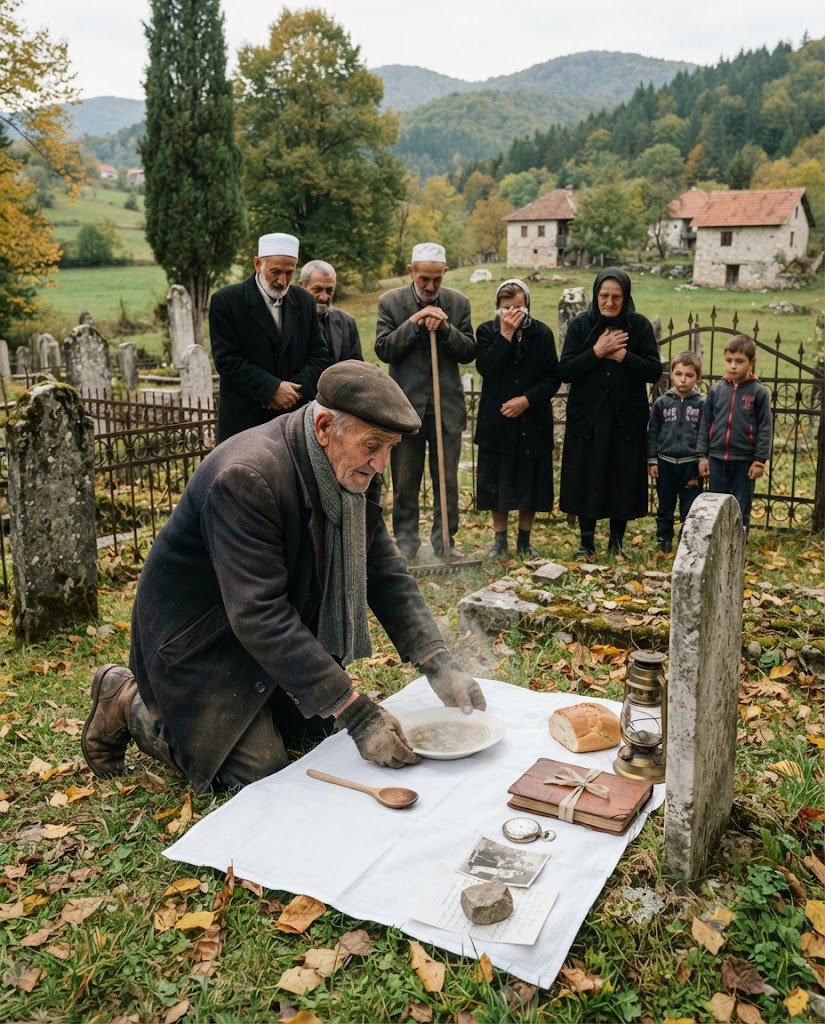
One year after Emeka’s death, Chinedu stood beside his grave carrying the dusty brown suitcase.
He placed fresh flowers on the soil.
“Papa,” he whispered, “I found the truth. But I found it too late.”
The wind moved gently through the palm trees.
Chinedu opened the suitcase and removed the affidavit. For months, he had hated the document because it proved Emeka was not his biological father.
Now he understood that it proved something else.
Fatherhood was not a name written under an official stamp.
It was a man selling his land to educate a child who was not his blood.
It was a man protecting that child from shame.
It was a man sleeping hungry rather than exposing the son who had rejected him.
Chinedu folded the document and placed it back inside the suitcase.
Then he touched the grave and said the words he wished he had spoken before it was too late.
“You were my real father. You were the only real father I ever had.”
From that day onward, Chinedu told Emeka’s story to every young person who visited the foundation.
He told them that lies can enter a family quietly, wearing the face of love.
He told them that pride can make a person destroy what money can never replace.
And he told them never to wait for a funeral, an old suitcase or a hidden document before recognising the person who truly loved them.
END