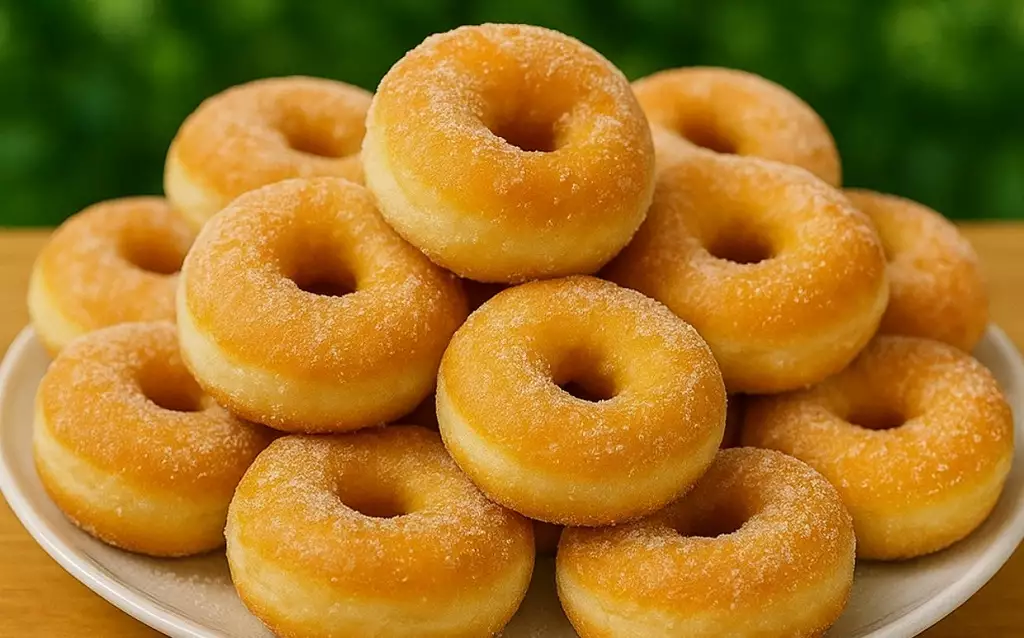
Nothing beats the taste of freshly made homemade doughnuts! These Fluffy Homemade Doughnuts are beautifully golden on the outside, incredibly soft and airy on the inside, and finished with a delicate dusting of powdered sugar.
Made with simple ingredients like flour, milk, butter, eggs, and yeast, these delicious doughnuts are perfect for breakfast, afternoon snacks, family gatherings, or a sweet treat with coffee.
Whether you prefer classic powdered sugar doughnuts, chocolate-glazed treats, or jam-filled delights, this easy recipe delivers bakery-style results right in your kitchen.
Recipe Information
- Prep Time: 20 minutes
- Rising Time: 1½–2½ hours
- Cooking Time: 15–20 minutes
- Total Time: Approximately 2–3 hours
- Servings: 12–15 doughnuts
- Cooking Method: Deep frying
Ingredients
For the Doughnuts
- 4 cups (500 g) all-purpose flour
- ¼ cup (50 g) granulated sugar
- 2¼ teaspoons (7 g) active dry yeast
- 1 cup (240 ml) warm milk
- ¼ cup (57 g) unsalted butter, softened
- 2 large eggs
- ½ teaspoon salt
- 1 teaspoon vanilla extract (optional)
- Vegetable oil, for frying
For the Topping
- ½ cup powdered sugar, for dusting
Optional Fillings and Decorations
- Strawberry or raspberry jam
- Chocolate spread
- Vanilla pastry cream
- Chocolate glaze
- Colorful sprinkles
- Toasted coconut or chopped nuts
Step-by-Step Instructions
Step 1: Activate the Yeast
Pour the warm milk into a small bowl. Add the active dry yeast and a teaspoon of sugar taken from the measured amount.
Stir gently and let the mixture rest for 5–10 minutes until it becomes foamy.
The milk should be approximately 105–110°F (40–43°C). Avoid using excessively hot milk, as it can damage the yeast.
Step 2: Prepare the Dough
In a large mixing bowl, combine the flour, remaining sugar, and salt.
Add the softened butter, eggs, vanilla extract, and activated yeast mixture.
Mix everything until a soft, slightly sticky dough forms.
Step 3: Knead the Dough
Transfer the dough to a lightly floured work surface.
Knead for approximately 8–10 minutes until smooth, elastic, and soft.
Avoid adding too much extra flour, as a slightly tacky dough helps create light and fluffy doughnuts.
Step 4: Let the Dough Rise
Place the dough in a lightly greased bowl and cover it with a clean kitchen towel or plastic wrap.
Allow it to rise in a warm, draft-free place for approximately 1–2 hours, or until doubled in size.
This step is essential for achieving a soft and airy texture.
Step 5: Shape the Doughnuts
Gently punch down the risen dough to release excess air.
Transfer it to a lightly floured surface and roll it out to approximately ½-inch thickness.
Use a doughnut cutter or two round cutters to create the classic doughnut shape.
Place the shaped doughnuts on a parchment-lined baking sheet, leaving space between them.
Step 6: Second Rise
Cover the shaped doughnuts loosely with a clean kitchen towel.
Let them rise for another 25–35 minutes until noticeably puffy.
This second rise helps create the signature light, pillowy texture.
Step 7: Fry Until Golden Brown
Heat vegetable oil in a deep, heavy-bottomed pot to 350°F (175°C).
Carefully lower a few doughnuts into the hot oil without overcrowding the pot.
Fry for approximately 1–2 minutes per side until golden brown and cooked through.
Use a slotted spoon to transfer the doughnuts to a wire rack lined underneath with paper towels.
Maintain a consistent oil temperature for even cooking.
Step 8: Add the Finishing Touch
Allow the doughnuts to cool slightly.
Dust generously with powdered sugar while they are still warm.
For extra flavor, dip them in chocolate glaze, coat them in cinnamon sugar, or fill them with your favorite jam or cream.
Serve fresh and enjoy!
Tips for Perfect Fluffy Doughnuts
1. Use Fresh Yeast
Make sure your yeast is active before mixing the dough. Foamy yeast helps produce light, well-risen doughnuts.
2. Keep the Milk Warm, Not Hot
Warm milk activates the yeast, while excessively hot milk can prevent the dough from rising.
3. Knead Until Smooth
Proper kneading develops the dough’s structure and creates a soft, elastic texture.
4. Allow Enough Rising Time
Do not rush the rising process. Properly proofed doughnuts become noticeably fluffy and airy.
5. Maintain the Correct Oil Temperature
Keep the frying oil around 350°F (175°C). Oil that is too cool can make doughnuts greasy, while excessively hot oil may brown them before the centers cook.
6. Fry in Small Batches
Avoid overcrowding the pot to maintain an even cooking temperature.
7. Serve Fresh
Homemade doughnuts taste best shortly after frying, while their centers are soft and tender.
Delicious Doughnut Variations
Classic Powdered Sugar Doughnuts
Dust freshly fried doughnuts with powdered sugar for a simple, traditional finish.
Cinnamon Sugar Doughnuts
Combine ½ cup granulated sugar with 1 teaspoon ground cinnamon.
Roll the warm doughnuts in the mixture until evenly coated.
Chocolate-Glazed Doughnuts
Dip cooled doughnuts into melted chocolate glaze and decorate with colorful sprinkles.
Jam-Filled Doughnuts
Prepare round doughnuts without center holes.
After frying and cooling, use a piping bag to fill them with strawberry, raspberry, or apricot jam.
Cream-Filled Doughnuts
Fill cooled doughnuts with vanilla pastry cream or whipped cream for a rich, bakery-style dessert.
Coconut Doughnuts
Dip the doughnuts in a simple vanilla glaze and sprinkle with toasted coconut.
Can You Bake These Doughnuts Instead?
Yes! Although frying produces the traditional golden crust and tender texture, these doughnuts can also be baked.
Preheat the oven to 375°F (190°C).
Place the shaped and risen doughnuts on a parchment-lined baking sheet.
Bake for approximately 10–12 minutes, or until lightly golden and cooked through.
Brush the warm doughnuts with melted butter and dust with powdered sugar.
Baked doughnuts will have a slightly more bread-like texture than fried ones.
Serving Suggestions
Fluffy Homemade Doughnuts are delicious served warm with a hot cup of coffee, tea, or a glass of cold milk.
They are perfect for weekend breakfasts, birthday celebrations, brunch gatherings, and afternoon snacks.
For special occasions, arrange different flavors on a serving platter and decorate them with chocolate, colorful sprinkles, powdered sugar, or fruit fillings.
How to Store Homemade Doughnuts
Room Temperature
Store completely cooled, unfilled doughnuts in an airtight container at room temperature for up to 2 days.
Refrigerator
Doughnuts filled with whipped cream, custard, or other perishable fillings should be refrigerated promptly and enjoyed within 2–3 days.
Freezer
Freeze unfilled doughnuts in a freezer-safe container or bag for up to 2 months.
For best results, freeze them without powdered sugar or glaze.
Reheating
Allow frozen doughnuts to thaw at room temperature.
Warm unfilled doughnuts briefly in the microwave for approximately 8–12 seconds to restore some softness.
Add fresh powdered sugar or glaze before serving.
Frequently Asked Questions
Why Are My Homemade Doughnuts Not Fluffy?
Dense doughnuts can result from inactive yeast, insufficient rising time, excessive flour, or improper kneading.
For the best results, use fresh yeast, measure ingredients carefully, and allow the dough to rise until doubled.
Can I Make the Dough Ahead of Time?
Yes. Prepare the dough, cover it tightly, and refrigerate overnight after a short initial rise.
The next day, allow it to finish rising if necessary, then shape, proof, and fry as directed.
What Is the Best Oil for Frying Doughnuts?
Neutral oils with suitable frying temperatures, such as vegetable, canola, or sunflower oil, work well.
How Do I Keep Doughnuts From Absorbing Too Much Oil?
Maintain the oil temperature around 350°F (175°C) and avoid frying too many doughnuts at once.
Properly risen doughnuts also tend to fry more evenly.
Can I Make These Doughnuts Without Eggs?
Yes. An egg replacer can be used, although the texture and richness may differ from the original recipe.
Can I Make Vegan Doughnuts?
Yes. Replace dairy milk with plant-based milk, use vegan butter, and substitute the eggs with a suitable commercial egg replacer.
Can I Freeze Homemade Doughnuts?
Absolutely! Freeze completely cooled, unfilled doughnuts for up to 2 months. Thaw and warm gently before serving.
How Do I Know When the Doughnuts Are Cooked?
The doughnuts should be evenly golden brown on both sides and fully cooked in the center.
If necessary, cut open one test doughnut to check before frying the remaining batch.
Final Thoughts
These Fluffy Homemade Doughnuts are wonderfully soft, airy, golden, and delicious. With a few simple ingredients and easy-to-follow steps, you can create fresh, bakery-style doughnuts at home.
Enjoy them with a classic powdered sugar coating, rich chocolate glaze, or your favorite sweet filling.
Perfect for breakfast, dessert, or sharing with family and friends, these homemade doughnuts are a delightful treat for any occasion.
Try this easy Fluffy Homemade Doughnuts Recipe and enjoy soft, golden, melt-in-your-mouth goodness in every bite!